
Tell us about the property and the problem. We’ll follow up to schedule a site visit.
Commercial Property Services
Commercial Doors, Frames & Hardware
The whole opening, not just the door — frames, closers, panic hardware, locksets, and storefront entrances.
Security, life-safety, and accessibility issues handled on commercial property across the Midwest. Fire-rated openings and ADA problems included.
How we approach it
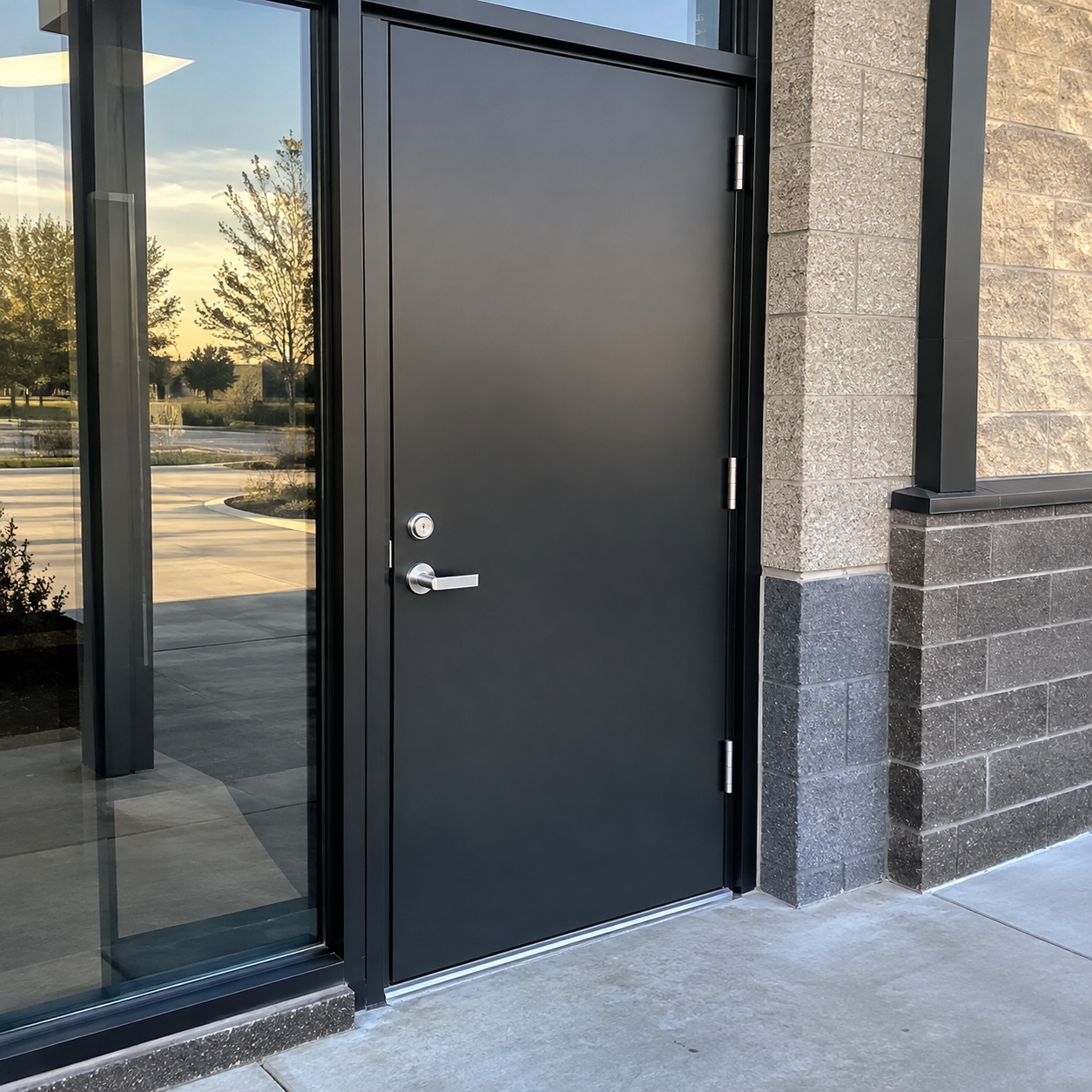
A door is an assembly, not a slab
When a commercial door stops working, the door itself is often the one part that is fine. The problem is usually in the rest of the opening — worn hinges, a loose or misaligned strike, a closer that has lost power, or a frame that has shifted.
That is why swapping the slab so often fails to fix it. We repair the whole assembly: door, frame, hinges, closer, strike, and hardware.
A door that will not latch is a security problem. A door that will not open is a life-safety problem. Both tend to get patched with a wedge, a zip tie, or a strike filed wider until somebody finally calls.
Those field fixes have real costs. A wedged fire door is a citation. A filed-out strike weakens the connection and comes back worse in six months. A door propped because the closer fights people is an open building after hours.
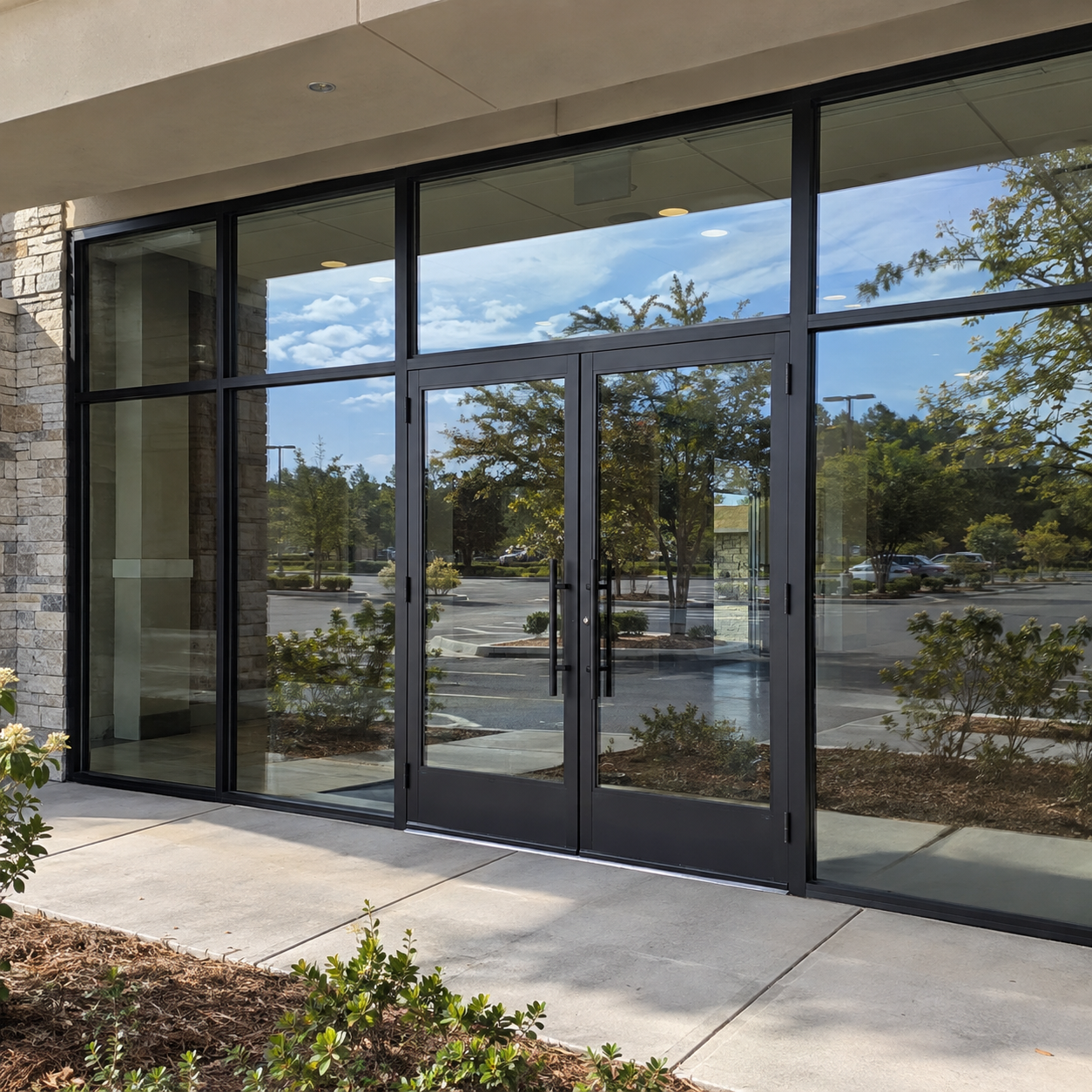
We handle hollow metal doors and frames, aluminum storefront entrances, fire-rated openings, and the full range of hardware — and we will tell you when the frame is the actual problem rather than selling you a door that will have the same symptom in a year.
What we see most
Common commercial door problems
Most of these have the same symptom from the hallway and completely different repairs behind them.
Call 309-796-2222Worn hinges let the door sag below the strike, the strike has loosened, or the closer no longer pushes it through the last inch. Three causes, three different fixes.
A failing closer does one or the other. Slamming wears out the frame, hinges, and latch; standing open costs you conditioned air and leaves the building unsecured.
Exit devices are a life-safety item and among the first things an inspector checks. A bar that has to be hit twice is a finding waiting to happen.
Gaps mean lost conditioned air, water and pests getting in, and an easier entry after hours. Often the frame has shifted rather than the weatherstripping failing.
Salt, snowmelt, and standing water eat hollow metal doors from the bottom edge up. Once it is through, hardware has nothing solid to anchor to.
Carts, pallet jacks, and vehicles rack frames and bend slabs. A racked frame will not hold alignment no matter how many times the strike gets moved.
What we do
Commercial door and hardware services
Repair, replacement, and adjustment across the whole opening.
Call 309-796-2222- Hollow metal door repair and replacement
- Frame repair, straightening, and replacement
- Rusted bottom edge repair and door bottoms
- Wood and solid-core door repair
- Hinge replacement and continuous hinges
- Door prep for new hardware
- Kick plates, armor plates, and protection
- Vision lites and glazing
- Door closer repair, replacement, adjustment
- Concealed and overhead closers
- Spring hinge and pivot service
- Automatic and power operators
- Push-plate and touchless actuators
- Hold-open devices tied to fire alarm
- Stops, holders, and coordinators
- ADA opening force and closing speed
- Panic bars and exit device repair
- Locksets, levers, and mortise locks
- Cylinders, rekeying, and master keying
- Electric strikes and maglocks
- Keypad and card access hardware
- Strike plate alignment and replacement
- Deadbolts and auxiliary locks
- Exit alarms and delayed egress
- Aluminum storefront door repair
- Pivots, bottom arms, and top jamb hardware
- Storefront glass replacement
- Thresholds and saddles
- Weatherstripping and sweeps
- Entrance frame repair
- Exterior door replacement
- Vestibule and double-entry doors
Fire doors & accessibility
The two doors an inspector will check
Most door repairs are maintenance. Two categories are not: fire-rated openings and accessible routes. Both carry obligations that sit with the building owner, and both show up on inspections.
NFPA 80 calls for fire door assemblies to be inspected and tested at least once a year by a qualified person, with a written, signed record kept and available to the authority having jurisdiction.
What gets checked, in plain terms: labels present and legible, clearances within limits, no unfilled holes from removed hardware, the self-closer fully closing and latching the door from a fully open position, latching hardware engaging, and nothing interfering with closing — which includes wedges and kick-down stops.
The practical consequence is that a fire door cannot be propped. If an opening genuinely needs to stay open during business hours, the compliant answer is a hold-open device tied to the fire alarm so it releases automatically. We install those, and we handle the repairs that come out of a failed inspection.
The 2010 ADA Standards cap the force to open an interior hinged door at 5 pounds. Fire doors are exempt, since they still have to latch — those require the minimum force the AHJ allows. Exterior doors fall to local code rather than that provision.
Hardware has to be operable with one hand, without tight grasping, pinching, or twisting of the wrist, and mounted 34 to 48 inches above the floor. Closers have to be slow enough to take at least 5 seconds from 90 degrees open to 12 degrees from the latch.
In practice, the ADA problems we find most are closers cranked too tight and round knobs that should be levers. Both are inexpensive fixes that quietly remove a real exposure.
Codes and adopted editions vary by jurisdiction, so confirm specifics with your AHJ. We will tell you what we see on your openings and what it takes to correct it.
The real question
Repair the opening or replace it?
Hardware is replaceable without touching the opening, which is why most door problems are repairs. The exceptions are worth knowing.
- Door and frame are straight and solidly anchored
- The problem is a closer, hinge, strike, or lockset
- The slab is sound with no rust-through at the bottom
- Hardware has solid material to anchor into
- A fire label is present, legible, and unmodified
- Alignment holds once the worn part is replaced
- The frame is racked or pulling away from the wall
- The slab is rusted through at the bottom edge
- The door has been drilled and patched repeatedly
- Alignment will not hold no matter what is adjusted
- Field modifications have voided a fire label
- The opening is on its third repair in two years
Why West Maintenance
Why property managers call us for doors
Door, frame, hinges, closer, strike, and hardware as one assembly — so the symptom does not come back in six months.
An opening that will not lock is an exposure every hour it stays that way. Those move to the front of the schedule.
Fire-rated openings and ADA findings handled directly, with the corrections priced item by item against the report.
A frame pulling out of a block wall needs more than a door company. We repair the wall and the opening on the same bid.
Nights, weekends, and phased work so a storefront, clinic, or warehouse keeps operating while the opening is out.
Single sites and multi-location portfolios run on one account, one contact, and one consistent standard.
Our work
Door work we have handled
Recent work from commercial properties we maintain across the Midwest.
Call 309-796-2222
How we work
Three steps from broken to fixed
No contract required. Plenty of accounts start with one door.
Call 309-796-2222Which door, and what the symptom is — won’t latch, won’t close, won’t lock, sticking bar. If the building is unsecured, say so and we prioritize it.
Door, frame, hinges, closer, strike, and hardware — because the part that failed is often not the part causing the symptom. Then a firm price, item by item.
Repaired, adjusted, and tested — latching, closing, and locking the way it should, documented for your records.
Common questions
Commercial door repair FAQs
Not covered here? Call and ask — we would rather answer it on the phone than have you guess.
Call 309-796-2222Why won’t my commercial door latch?
Usually one of three things, and the fix depends on which. The hinges have worn and the door has sagged, dropping the latch below the strike. The strike itself is misaligned or has loosened. Or the closer has lost power and no longer pushes the door through the last inch of travel.
Less often the frame itself has shifted — from settling, a vehicle impact, or years of slamming — and then moving the strike will not hold. We check the whole opening rather than adjusting the one part that is easiest to reach.
How much does commercial door repair cost?
It ranges enormously, because "the door won’t close" can mean a twenty-minute closer adjustment or a frame replacement with masonry work attached. The symptom is identical from the hallway.
We look at the opening, tell you what is actually wrong, and price the repair item by item. If the honest answer is that an adjustment fixes it, that is the bid you get.
Should I repair or replace a commercial door?
Repair is usually right when the door and frame are sound and the problem is hardware — closers, hinges, strikes, locksets, and panic devices are all replaceable without touching the opening.
Replacement makes more sense when the slab is rusted through at the bottom, the frame is racked or has pulled away from the wall, or the door has been drilled and patched so many times that no new hardware has solid material to bite into. On a fire-rated opening, field modifications can also void the label, which forces the question.
Do fire doors have to be inspected every year?
NFPA 80 requires fire door assemblies to be inspected and tested at least annually by a qualified person, with a written, signed record kept and made available to the authority having jurisdiction.
The inspection covers labels, clearances around the door, whether the self-closing device fully closes and latches the door from a fully open position, whether latching hardware engages, and whether anything — a kick-down stop, a wedge, added hardware — interferes with closing. Which edition of NFPA 80 applies is set by your local AHJ, so confirm the specifics with them.
Can a fire door be propped open?
Not with a wedge or a kick-down stop. A fire door has to be able to close and latch on its own, and anything that defeats that is a violation an inspector will cite.
If a door genuinely needs to stay open during business hours, the compliant way to do it is a hold-open device tied to the fire alarm so it releases automatically. We install those.
What does ADA require for commercial doors?
The 2010 ADA Standards cap the force needed to push or pull open an interior hinged door at 5 pounds. Fire doors are exempt from that cap — they require the minimum force allowed by the AHJ, since they still have to latch. Exterior doors are not covered by that provision and fall to local code.
ADA also requires hardware operable with one hand without tight grasping, pinching, or twisting of the wrist, mounted between 34 and 48 inches above the floor, and closers slow enough to take at least 5 seconds to travel from 90 degrees open to 12 degrees from the latch.
In practice, most ADA door problems we find are closers adjusted too tight and round knobs that should be levers. Both are straightforward fixes.
Do you repair storefront and glass entrance doors?
Yes. Aluminum storefront doors are their own animal — pivots and bottom arms rather than hinges, concealed closers, and specific lock and threshold hardware. We repair and replace pivots, closers, weatherstripping, thresholds, locks, and the frames themselves.
Glass replacement in a storefront frame is included; we coordinate the glazing.
What about overhead and dock doors?
Those go with the dock. We repair sectional and rolling service doors, tracks, springs, and openers — see loading dock repair, where they sit alongside levelers, bumpers, and seals.
Can you rekey or change locks across a property?
Yes — locksets, cylinders, and keying, including master key systems across a building or a portfolio. This comes up most often at tenant turnover or after a staffing change, and it is usually worth doing the whole opening at once rather than swapping the cylinder and leaving a worn latch behind it.
How fast can you get out for a door that won’t secure?
Call 309-796-2222. A door that will not lock is a security exposure every hour it stays that way, so we treat it as urgent and prioritize it accordingly. Call rather than sending a form — these move faster by phone.
Related services
Often handled on the same visit
Openings rarely come alone. Dock doors, accessible routes, and the rest of the building run on the same account.
All ServicesRequest a bid on door and hardware repair
Tell us which door and what it is doing. We’ll follow up to schedule a site visit.
309-796-2222- We walk the site and assess the actual condition.
- You get a priced scope before any work starts.
- Emergency? Call the number above instead of filling this out.
Send the details and we’ll be in touch to schedule a site visit.
